


From Vibe-Coding to Specs: How Junior Developers Are Finding Their Place in AI Teams
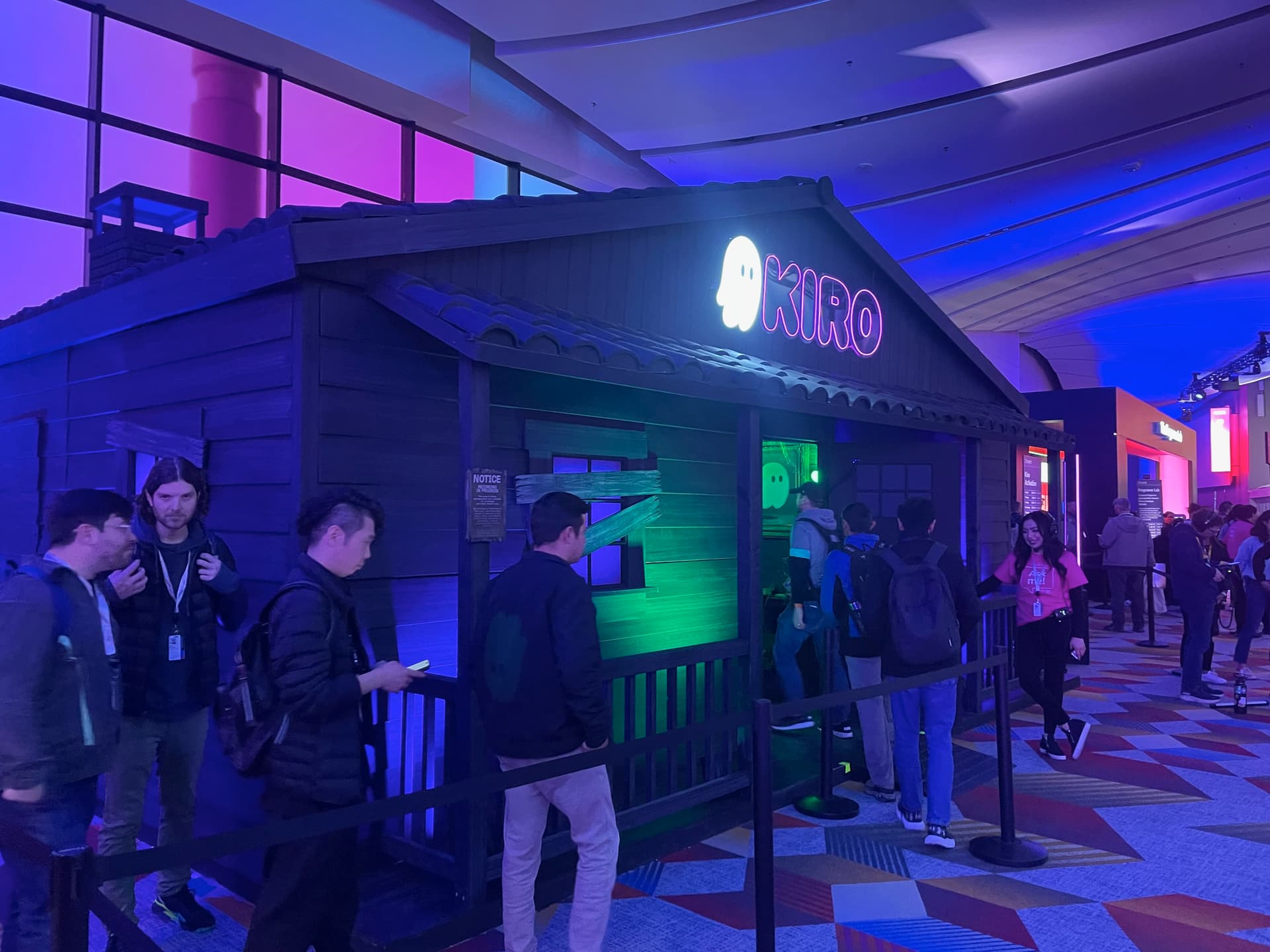
At AWS re:Invent in Las Vegas last month, one product got an unusual amount of air time: Kiro. Not the latest database innovation or compute breakthrough, but a development tool that generates technical specifications from business requirements. AWS CEO Matt Garman spent a whole 5 minutes demoing Kiro in the keynote. The biggest stand-alone activation for AWS was a Kiro-themed haunted house.
It signals something important, the era of "vibe-coding" is ending. Spec-driven development is taking over.
The Vibe-Coding Problem
For the past two years, developers have thrown prompts at AI, iterated based on feel, and hoped the output matched their mental model. This approach has a massive bias toward senior developers. Why? Because senior devs know what good code looks like, understand architectural patterns, and can anticipate business needs before they're explicitly stated.
A senior developer using Cursor or GitHub Copilot can say "build a user authentication system" and mentally fill in all the blanks: session management, password hashing standards, rate limiting, token refresh patterns, and database schema considerations. The AI generates code, and the senior dev quickly spots what's wrong or missing.
A junior developer with the same prompt? They might not know what questions to ask. They don't have the pattern recognition to spot security vulnerabilities or architectural inconsistencies. The AI output might compile and run, but it could be fundamentally flawed. This has created a productivity gap where AI tools amplify the advantage that senior developers already had.
Enter Spec-Driven Development
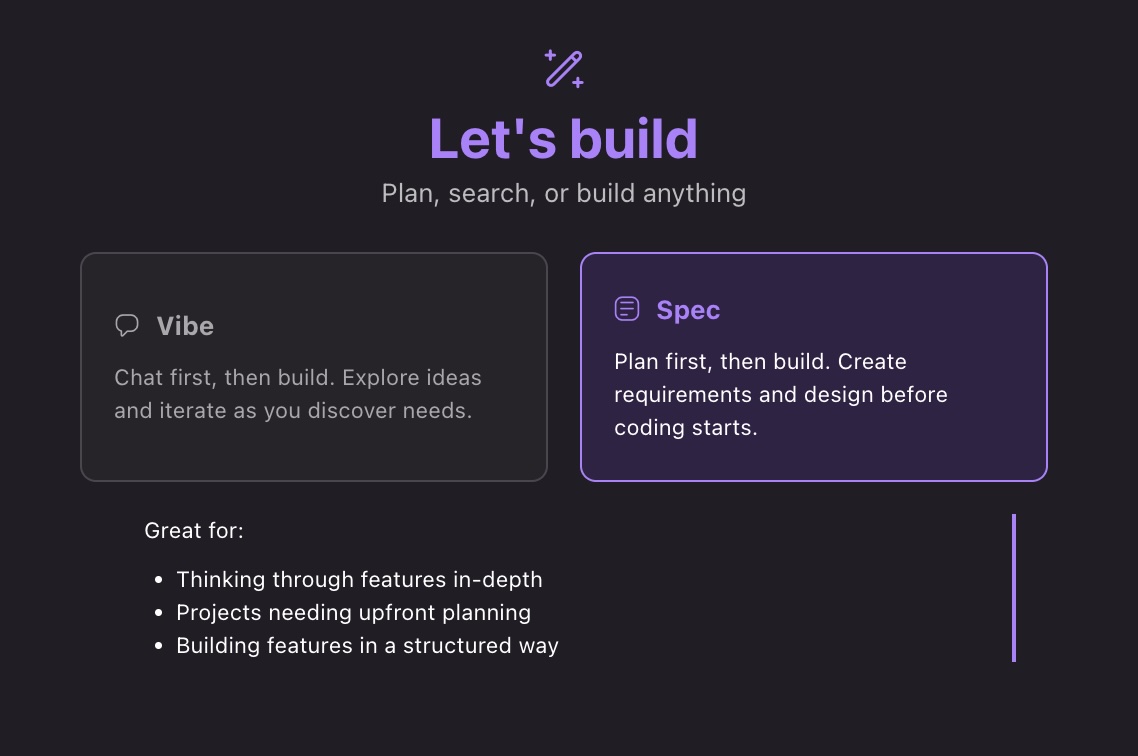
Spec-driven development changes this dynamic entirely. Instead of going straight from idea to code, you insert a specification layer in between:
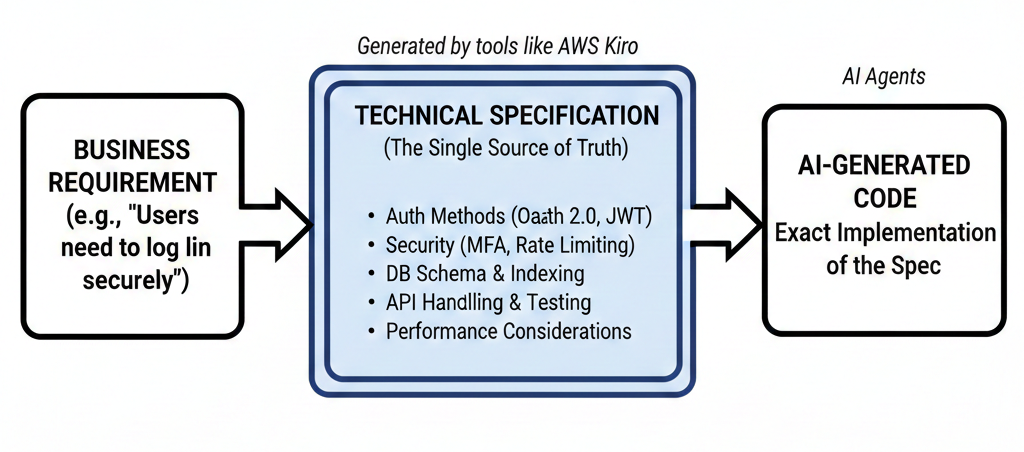
Business Requirement → Technical Specification → AI-Generated Code
Tools like AWS Kiro take a business requirement like "users need to log in securely" and generate a comprehensive technical specification that includes:
- Authentication method selection (OAuth 2.0, JWT, session-based)
- Security requirements (password complexity, MFA options, rate limiting)
- Database schema with proper indexing
- API endpoint definitions with request/response formats
- Error handling patterns
- Testing requirements
- Performance considerations
This spec becomes the single source of truth. AI agents then generate code that implements the spec exactly. The critical insight: writing good specs is a different skill than writing good code, and it's one where junior developers can excel with the right tooling.
Why This Levels the Playing Field
Here's what I've observed working with teams implementing spec-driven workflows:
1. Explicit Knowledge Transfer
When a senior developer reviews a spec, they're teaching the system (and by extension, junior developers) their decision-making process. "Why OAuth instead of session-based auth?" gets documented in the spec, not hidden in their mental model. Junior developers learn by seeing decisions explained, not by osmosis.
2. Democratized Architecture Review
A spec can be reviewed by multiple people before any code is written. Junior developers can propose specs, get feedback, and iterate, all without wasting engineering time on implementation. The cost of being wrong drops dramatically because you're just editing a document, not refactoring code.
3. Business-to-Technical Translation as a Core Skill
Junior developers often excel at communicating with non-technical stakeholders because they haven't yet internalized the engineer's instinct to abstract everything. Spec-driven development makes this translation skill (business requirement to technical spec) a primary value driver. Suddenly, that junior developer who spent two years as a product manager before switching to engineering is incredibly valuable.
4. AI as the Tireless Junior Coder
Once you have a solid spec, generating the actual code is easy. This is where AI truly shines: perfectly following detailed instructions without shortcuts or "I'll fix that later" compromises. The senior developer's advantage (writing clean code quickly) gets automated, while the junior developer's growing advantage (understanding business context and translating it) becomes central.
The Evolution We're Seeing
I've consistently seen that teams who invest upfront time in structured processes get incredible results, sometimes even doubling their development velocity, but here's what's changing:
Six Months Ago: Senior dev writes code with AI assistance, junior dev reviews and learns
Today: Junior dev drafts spec, senior dev reviews spec, AI generates code, anyone can review implementation against spec
Six Months from Now: Junior dev drafts spec with AI assistance, automated tools check spec completeness and architectural consistency, AI generates and tests code, senior dev makes global architectural decisions that guide specs
The bottleneck is shifting from "writing code" to "defining what to build." And defining what to build requires understanding the business, the users, and the problem space, which are skills that have nothing to do with years of coding experience.
What This Means for Engineering Managers
If you're building an AI-enabled software team, here's what I'm advising engineering leaders:
Invest in Spec Tooling
Whether it's AWS Kiro, custom specification frameworks, structured prompt repositories, or decision management platforms like Actual AI, you need a system for capturing technical specifications.
Hire for Different Skills
Look for junior developers with strong communication skills, business acumen, and systems thinking. The ability to write clean Python is becoming less important than the ability to translate ambiguous requirements into precise technical specifications.
Redefine Your Code Review Process
Stop reviewing code as the primary gate. Review specs first, thoroughly. By the time code is generated, the important decisions should already be baked in. If you're catching architectural issues during code review, your spec process isn't working.
Create Spec-Writing Training
Most CS programs don't teach specification writing. Most bootcamps don't either. If you want junior developers to excel in this model, you need to teach them. The good news: it's faster to teach spec-writing than to teach software architecture.
The Player-Coach Model Returns
As more of the administrative and coding functions are automated, I expect most engineering roles to shift. Senior developers will become player/coaches: reviewing specs, teaching architectural thinking, and handling the truly novel problems that AI can't solve yet. Junior developers will become spec-writing specialists who translate business needs into executable plans.
This is the same pattern we're seeing in engineering management. To manage AI, you need more AI. To code with AI, you need better specs.
The Uncomfortable Truth
Here's what nobody wants to say out loud: in a spec-driven world, a junior developer with great business understanding and spec-writing skills might deliver more value than a senior developer who just wants to write code.
The senior developers who thrive will be the ones who can zoom out, who understand that their value isn't in typing syntax, it's in architectural judgment and teaching others to make good decisions. The ones who resist this shift will find themselves competing with AI on AI's terms, and that's not a fight you can win.
Getting Started
If you're an engineering leader thinking about implementing spec-driven development, my straightforward advice: set aside four to six weeks, grab a small team, and start prototyping your specification process.
Don't wait for the perfect tool. Start with markdown documents that define:
- Business requirements (the "why")
- Technical specifications (the "what")
- Implementation guidance (the "how")
Use AI to generate the code from your specs. Measure the difference. Iterate on your spec template.
The teams that figure this out in 2025 will have an enormous advantage by 2026. The ones still vibe-coding will be wondering why their productivity gains from AI have plateaued.
Moving to AI-powered software development? Actual AI provides agent-agnostic context management, centralized spec generation, and automated architectural review.